
David Icke’s Reptilian Theory: Claims, Origins & Evidence
- Who Is David Icke?
- What Does the Reptilian Theory Actually Claim?
- How The Biggest Secret Shaped the Modern Theory
- Serpent Myths, Anunnaki, and the Modern Alien Reinterpretation
- What Evidence Is Offered, and What Does It Show?
- Why the Theory Spread and Stayed Memorable
- Why the Theory Is Accused of Antisemitism
- The Evidence-Based Takeaway
- Frequently Asked Questions
The David Icke reptilian theory claims that shape-shifting, non-human beings hide behind some of the world's most powerful institutions and family lines.
It is a documented part of modern conspiracy culture, but that does not make its literal claims established fact. The sources reviewed for this article contain no independently verified biological specimen, reproducible observation, or authenticated footage demonstrating that reptilian humanoids live among us.
The more revealing story is how Icke joined New Age spirituality, UFO lore, ancient-astronaut ideas, secret-society narratives, and serpent symbolism into one unusually durable explanation of power. Understanding that history makes it easier to separate what Icke claims from what the available evidence actually shows.
A theory can be culturally influential without being factually true, and those two questions require different kinds of evidence.
Who Is David Icke?
David Icke is a British writer and lecturer who first became publicly known through football, broadcasting, and politics. He played goalkeeper for Coventry City and Hereford United before rheumatoid arthritis ended his career at 21. He later worked in sports journalism and presented programs for the BBC.
Icke was also a national speaker for the UK Green Party. Around 1990 and 1991, however, his public identity changed sharply as he began describing spiritual experiences and a special role in humanity's transformation. His appearance on the BBC talk show Wogan in 1991 brought ridicule, but he continued publishing and speaking.
Religious-studies scholar David G. Robertson's study of Icke's work traces a second shift during the mid-1990s. Icke began combining New Age beliefs with conspiracy narratives about hidden groups controlling human events. That combination became the foundation of his reptilian thesis.
What Does the Reptilian Theory Actually Claim?
Icke's theory is broader than the familiar joke that "lizard people run the world." Inside his framework, several related claims form one hidden history:
- Reptilian entities allegedly assume human appearance or operate through human-reptilian hybrids.
- Particular bloodlines supposedly preserve this connection across generations.
- Icke has called the alleged ruling network the Babylonian Brotherhood and linked it with the Illuminati.
- Members of royal, political, financial, religious, and media institutions are said to serve the resulting control system.
- The beings are associated with star systems such as Draco and Zeta Reticuli, but Icke also describes them as extra-dimensional rather than ordinary space travelers.
- Fear and anxiety allegedly help sustain both the beings and their control over human perception.
These are Icke's assertions, not verified descriptions of public figures or institutions. The distinction matters because the theory is designed to connect visible political power with an invisible non-human cause.
Robertson summarizes Icke's reptilians as beings that can take human form, exist on a less dense frequency, and covertly control the planet. The theory turns war, inequality, institutional secrecy, and social fear into parts of a single cosmic conflict.
Readers interested in how reptilians compare with Greys, Nordics, and other figures in UFO lore can see AlienInt's guide to reported alien types. That taxonomy describes recurring claims and cultural archetypes, not confirmed species.

- Explore UFO belief through the perspective of religious-studies scholar D. W. Pasulka
- Consider how technology and popular culture shape modern ideas about contact
- Add cultural context to stories that connect aliens with spiritual experience
How The Biggest Secret Shaped the Modern Theory
Icke's most influential presentation of the reptilian thesis appeared in The Biggest Secret. The 1999 book's publisher description says it advances the theory that reptilian humanoid extraterrestrials control the world through religious, governmental, and other organizations.
AlienInt's guide to UFO and alien books collects further reading across the wider subject.
That book did not create every ingredient from nothing. Robertson describes Icke as primarily a synthesizer and identifies Zecharia Sitchin as one major influence. In The 12th Planet and later books, Sitchin interpreted Mesopotamian material as a story about extraterrestrial Anunnaki who came to Earth and shaped human society.
Icke joined that ancient-astronaut narrative to existing Illuminati, secret-bloodline, UFO, and New Age material. The result was more expansive than a claim about visitors from another planet. It offered a total explanation for who rules, how control works, why humanity suffers, and why a promised spiritual transformation had not arrived.
Political scientist Michael Barkun places Icke at precisely this meeting point. The University of California Press description of A Culture of Conspiracy maps the convergence of UFO beliefs, the Illuminati, New World Order narratives, mass media, and Internet subcultures.
The Internet mattered because it let unofficial material circulate widely, cheaply, and quickly. A strange claim no longer needed a conventional publisher or television producer to reach a global audience.
Serpent Myths, Anunnaki, and the Modern Alien Reinterpretation
Serpents, dragons, and human-animal hybrids appear across many mythologies. Their recurrence helps the reptilian idea feel ancient, but resemblance does not show that every tradition records one hidden species.
The historical context differs from the modern alien reading. The Metropolitan Museum of Art's overview of Mesopotamian deities explains that the region's gods belonged to changing pantheons and were generally conceived in human or humanlike terms. Their roles reflected particular cities, texts, and periods.
Sitchin later treated the Anunnaki as extraterrestrial visitors. Robertson says that account relies on controversial translations of Assyrian and Babylonian tablets. Icke incorporated the alien interpretation into his larger bloodline narrative.
Ancient Mesopotamian religion is real history. Calling its gods reptilian aliens is a modern ancient-astronaut reinterpretation, not the standard historical conclusion represented by museum scholarship.
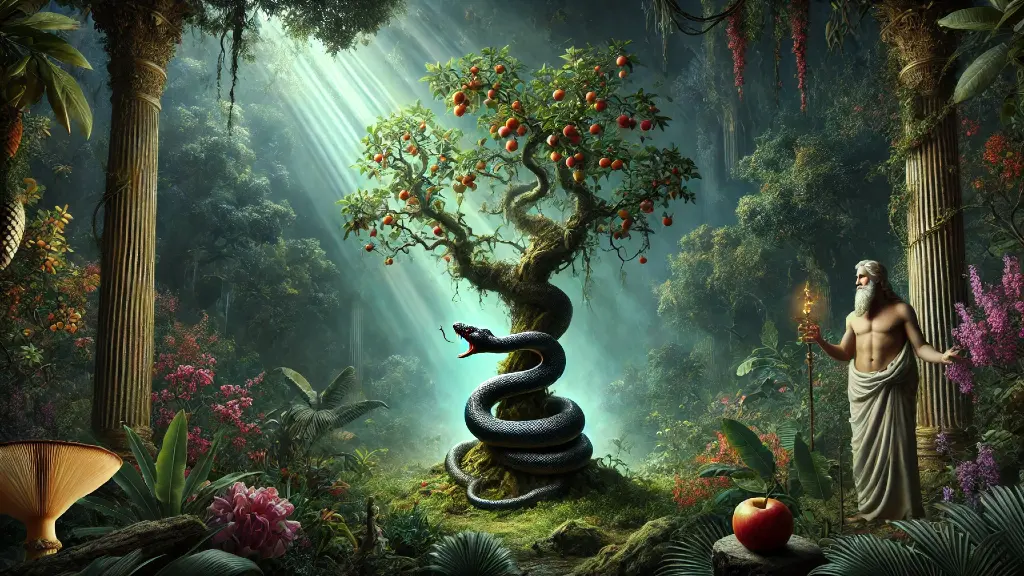
Biblical serpent imagery has undergone similar reinterpretation. AlienInt's article on UFOs and aliens in the Bible explores those readings, but a modern parallel does not by itself establish what an ancient author intended.
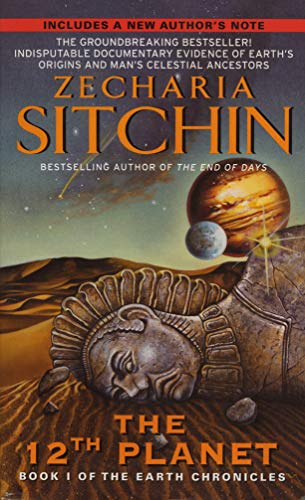
- Read the ancient-astronaut interpretation behind Sitchin's Nibiru narrative
- Explore ideas that strongly influenced later Anunnaki and alien-origin stories
- Evaluate the author's argument directly rather than through secondhand summaries
What Evidence Is Offered, and What Does It Show?
Supporters commonly point to Icke's books, personal testimony, symbolic parallels, claims about bloodlines, and videos in which a public figure's eyes or face appear to change. These materials may document what people believe, but they are not equivalent to independent physical verification.
The video examples are especially instructive. A Lead Stories investigation of a ten-clip compilation traced supposed transformations to several ordinary causes. The examples included computer-generated pupils, an eye effect deliberately added to a comedy program, a later altered repost, unusual but human eye anatomy, and production or transmission glitches.
Many viral copies are degraded, stripped of their original audio, or reposted without enough context to identify the source. That makes an apparent visual anomaly harder to trace while a narrator supplies the reptilian interpretation. In examples where investigators located an original or better-quality copy, it did not show a person transforming.
A useful verification process is straightforward:
- Find the earliest and highest-quality version available.
- Restore the original audio, date, speaker, and surrounding footage.
- Compare the viral clip with an unedited copy from the original publisher.
- Check for post-production effects, transmission artifacts, lighting, and medical explanations.
- Ask whether an independent observer can reproduce or verify the alleged transformation.
This process does not prove that every imaginable non-human being is impossible. It shows why a degraded clip is weak evidence for an extraordinary biological claim.
There is a second problem. If every missing specimen is explained as a cover-up and every debunked video is treated as proof that the cover-up has improved, the theory becomes insulated from disconfirmation. A claim that can absorb every possible result is difficult to test and cannot gain credibility merely by surviving its own lack of evidence.

- Develop practical questions for assessing extraordinary claims
- Explore why compelling stories can feel more convincing than the evidence warrants
- Bring a thoughtful scientific perspective to UFOs, mysteries, and unfamiliar ideas
Why the Theory Spread and Stayed Memorable
The reptilian theory compresses abstract fears into an image. Secrecy, inherited privilege, war, and distrust of leaders become easier to picture when the alleged cause has scales and a human disguise.
It is also an absorptive story. A political scandal, ancient carving, video glitch, or celebrity mannerism can be added without changing its structure. Online lectures, clips, forums, memes, and even jokes carried the idea to people who had never read Icke.
Research on conspiracy belief offers context without reducing believers to a stereotype. A peer-reviewed review in Current Directions in Psychological Science groups common motivations into three broad categories: understanding one's environment, seeking safety or control, and protecting a positive image of oneself or one's group.
Those are general human motives, not a diagnosis of Icke's audience. The review cautions that conspiracy theories can be more appealing than satisfying. An explanation may feel complete without making someone safer or better informed.
Robertson offers a more specific interpretation of Icke's appeal. He reads the reptilian thesis as a New Age explanation for why an expected spiritual transformation failed to arrive. In that reading, humanity did not fail to change on its own. A hidden, non-human enemy prevented the change.
Why the Theory Is Accused of Antisemitism
The controversy involves more than whether the word "reptilian" secretly means "Jewish." It concerns the sources Icke has used, the families and institutions he names, and the resemblance between his hidden-bloodline narrative and older claims about Jewish control.
One documented issue is Icke's use of The Protocols of the Elders of Zion, which he relabeled the "Illuminati Protocols" in an earlier book, according to Robertson. The United States Holocaust Memorial Museum identifies the Protocols as an antisemitic forgery first published in 1903. It falsely presents Jewish leaders as members of a secret conspiracy to control world politics, finance, media, and society.
The Anti-Defamation League goes further. In a 2021 report, the organization assesses Icke's wider work as frequently antisemitic and points to his references to the Protocols, claims about Zionists and Israel, and placement of the Jewish Rothschild family within a reptilian bloodline.
Icke denies that his reptilian language is a code for Jewish people. He says the entities are literal, and his alleged reptilian list also includes many non-Jewish figures, including members of the British royal family. Robertson notes both facts while treating the question as serious and contested.
The most careful conclusion separates content from private intent. We can document that Icke used a notorious antisemitic forgery and repeated motifs about secret families controlling finance and government. We can also document his denial and literal interpretation. Determining an author's unspoken intent is different from evaluating the history and effects of the material itself.
The Evidence-Based Takeaway
David Icke's reptilian theory is significant as a modern myth about hidden power. Its books, lectures, imagery, and Internet afterlife are real and culturally influential.
The literal proposition is another matter. Ancient serpent symbols do not establish a shared reptilian species, modern Anunnaki claims are reinterpretations, and examined transformation videos have ordinary or manipulated explanations. The reviewed sources provide no credible, independently verified evidence that shape-shifting reptilian beings control human institutions.
The best way to approach the subject is to keep two questions separate: why a story became powerful, and whether its factual claims survive verification.
Frequently Asked Questions
Did David Icke invent the reptilian conspiracy theory?
No, not every component. UFO, secret-society, New Age, and ancient-astronaut ideas were already circulating. Icke's major contribution was combining these strands into an influential global theory centered on reptilian bloodlines and hidden institutional control, especially through The Biggest Secret. Earlier ingredients existed, but his particular synthesis became the best-known version.
Does David Icke mean reptilians literally?
Yes, according to his stated position and Robertson's scholarly analysis. Other commentators have read the imagery as satire or metaphor, but Icke has repeatedly insisted that he means reptilian entities literally. The claim should therefore be evaluated as a literal proposition, even when others use "lizard people" figuratively.
Are the Anunnaki reptilian aliens in ancient sources?
That is not the standard historical account. Historians treat the relevant Mesopotamian figures as deities within ancient religious pantheons. Their identification as extraterrestrial visitors comes from modern ancient-astronaut interpretations, which Icke incorporated into his own theory. Similar imagery across eras does not establish a shared extraterrestrial source.
Is there credible evidence for shape-shifting reptilians?
No credible, independently verified evidence appears in the sources reviewed here. Books, testimony, symbolic comparisons, and degraded video clips can show how the belief is expressed, but they do not demonstrate that human-looking reptilian beings exist or control public institutions. Investigated viral clips have instead produced ordinary, edited, or technical explanations.
Types of Aliens: 12 Beings Reported in UFO Lore
UFOs and Aliens in the Bible: Ancient Passages Explained